
Overview
Patrice Lumumba was the first democratically elected Prime Minister of the Republic of the Congo, taking office following the country's independence from Belgium in June 1960. Within months of independence, he was removed from power, imprisoned, and ultimately executed — a sequence of events that, unlike most entries on this wiki, has been substantially confirmed by official investigations and declassified government documents. The assassination of Patrice Lumumba stands as one of the rare cases where what began as a "conspiracy theory" was later validated as a confirmed conspiracy of state actors, making it a landmark case study in Cold War covert operations and Western interference in post-colonial Africa.
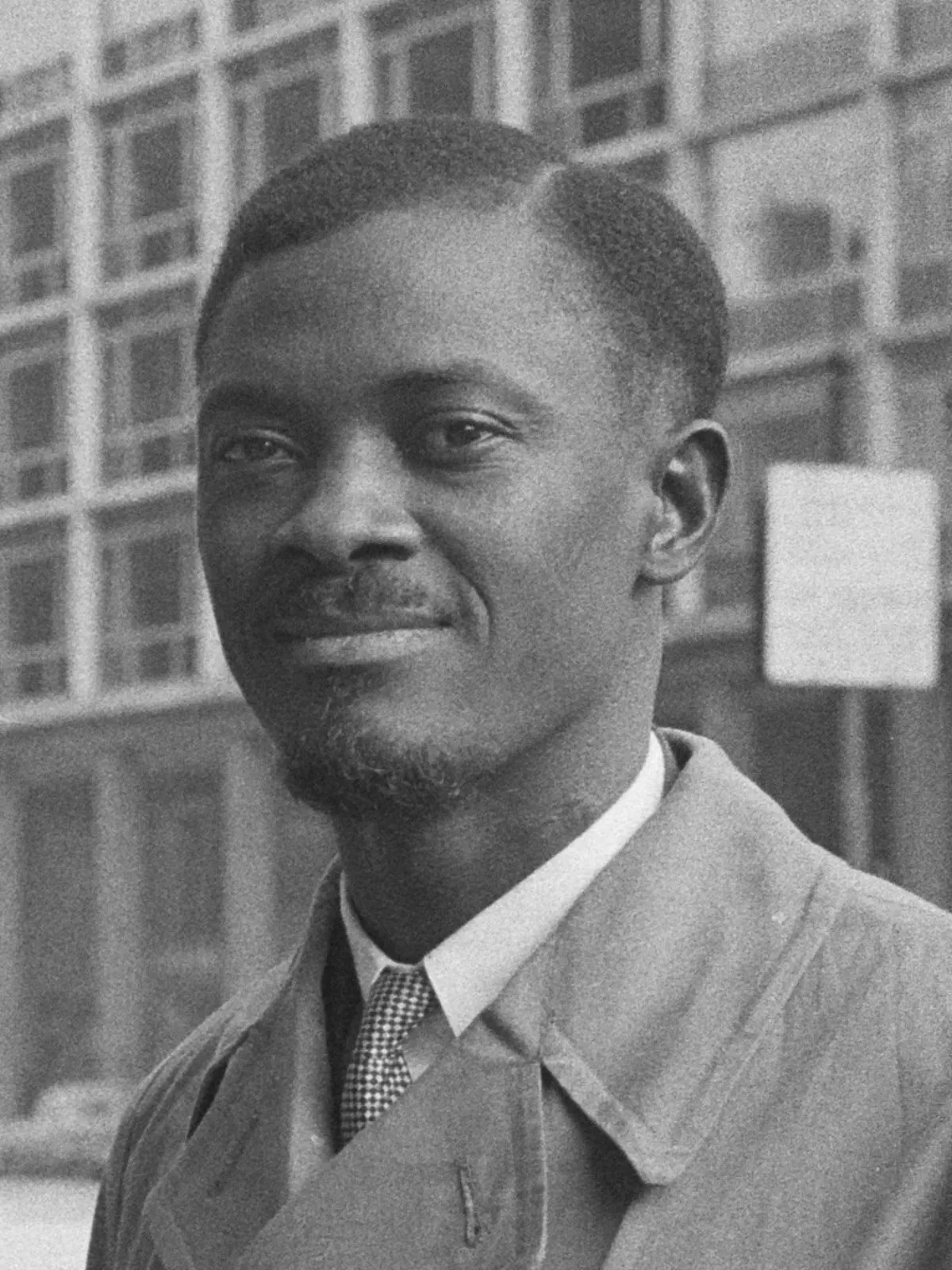
Wikimedia Commons — Harry Pot for Anefo ), CC BY 4.0

Background
Lumumba rose to prominence as a charismatic orator and pan-Africanist leader who sought genuine political and economic independence for the Congo — a country of immense strategic and mineral wealth that Belgium had controlled as a brutally exploited colony for decades. When independence arrived on June 30, 1960, Lumumba became Prime Minister while Joseph Kasavubu became President under a power-sharing arrangement.
Almost immediately, the new republic was plunged into crisis. The mineral-rich Katanga province, backed by Belgian mining interests and military officers, declared secession under Moise Tshombe. Lumumba appealed first to the United Nations for support, and when that response proved inadequate, he turned to the Soviet Union — a move that immediately alarmed Western governments at the height of the Cold War. To Washington and Brussels, a Soviet-aligned leader controlling one of Africa's most resource-rich nations was an intolerable strategic threat.
Western Intelligence Operations
Declassified documents and official investigations have since confirmed that both the United States and Belgium moved swiftly to eliminate Lumumba from power.
On the American side, the CIA's involvement was authorized at the highest levels. CIA Director Allen Dulles communicated to station officers in the Congo that Lumumba's removal was a priority. Under a covert program referred to in declassified records as "Project Wizard," the CIA dispatched a scientist — later identified in congressional testimony as a chemist — to the Congo carrying a biological toxin. According to testimony before the U.S. Senate's Church Committee in 1975, the plan involved introducing the poison into Lumumba's food or personal effects, including, as the existing record describes, potentially his toothbrush. This specific assassination method was never carried out, but it demonstrated the seriousness and operational specificity of CIA intentions.
Belgium's involvement was equally direct. Belgian officials maintained close contact with Congolese political rivals of Lumumba and provided crucial support to the secessionist Katanga government. Belgian officers and intelligence agents were present throughout the crisis and played an active role in the events that led to Lumumba's capture and death.
Removal, Capture, and Execution
In September 1960, President Kasavubu, acting with what historians have documented as encouragement from Western powers and the UN Secretariat, dismissed Lumumba from his position — a constitutionally dubious move that Lumumba contested. Army Colonel Joseph-Désiré Mobutu, who would later seize total power and rename himself Mobutu Sese Seko, effectively neutralized Lumumba's government with tacit Western support.
Lumumba attempted to flee to his political base in Stanleyville but was captured by Congolese forces in December 1960. He was transferred to Katanga province, where secessionist leader Tshombe and his Belgian-backed forces held him prisoner.
On January 17, 1961, Patrice Lumumba was executed by firing squad. Belgian officers were present at the execution. In the days that followed, his body was dismembered and dissolved in sulfuric acid — a deliberate effort, overseen with Belgian involvement, to ensure that no grave could exist and no site could become a memorial or place of political pilgrimage. A Belgian police officer, Gerard Soete, later described the disposal process in interviews and reportedly kept a tooth as a personal trophy — a claim that generated international outrage when it became public.
Official Investigations and Confirmed Findings
The theory that Western governments orchestrated Lumumba's assassination was long dismissed or minimized in official Western narratives. That changed substantially in subsequent decades.
In 1975, the U.S. Senate's Church Committee — formally the Select Committee to Study Governmental Operations with Respect to Intelligence Activities — examined CIA assassination plots and confirmed that the agency had plotted to kill Lumumba. The committee stopped short of concluding that U.S. actions directly caused his death, noting that he was killed by Congolese rivals before CIA-directed plans could be executed, but it confirmed the intent and operational preparation.
In 2001, a Belgian parliamentary commission concluded that Belgium bore "moral responsibility" for Lumumba's death and that Belgian officials were directly complicit in the events leading to his execution. The Belgian government issued a formal apology to the Congolese people.
In 2022, Belgium returned Lumumba's sole remaining physical relic — a gold tooth that had been retained by Soete's family — to his descendants, in a ceremony attended by Belgian and Congolese officials. The return was widely described as a symbolic act of partial reparation.
Legacy and Ongoing Significance
Lumumba's assassination had consequences that shaped Central Africa for decades. Mobutu, the officer who had neutralized him, consolidated power with continued Western support and ruled the Congo (renamed Zaire) as a kleptocratic dictator for over three decades. The mineral wealth Lumumba had sought to deploy in service of Congolese sovereignty was instead extracted under conditions that enriched foreign corporations and a corrupt ruling class.
For scholars of Cold War history, decolonization, and state-sponsored covert action, the Lumumba case is significant precisely because it moved from allegation to documented fact. It validates the methodological caution with which official denials of intelligence operations should be treated, and it remains a central reference point in discussions of Western intervention in African political affairs.
Lumumba himself has become an enduring symbol of anti-colonial struggle and African political martyrdom. His image appears in murals, films, and political literature across the continent and beyond. The 2000 documentary Lumumba, and the feature film of the same year directed by Raoul Peck, brought his story to wider international audiences and helped sustain public pressure for the official investigations that followed.