
What it was
In 1964 the United States Army commissioned a study with the title Methods for Predicting and Influencing Social Change and Internal War Potential. Its code name was Project Camelot.
The second half of that title is the part worth reading twice. The Army was not only funding research into why societies fall into internal conflict. It was funding research into how to influence whether they do.
The work was contracted to the Special Operations Research Office, an Army-funded research unit housed at American University in Washington. The budget was in the region of four to six million dollars over three or four years, which in 1964 made it one of the largest social science projects ever funded. Rex Hopper, chairman of sociology at Brooklyn College, directed it.
It attracted serious people. Thomas Schelling of Harvard, who would later win a Nobel prize in economics, James Coleman of Johns Hopkins, Charles Wolf Jr of RAND. These were not marginal figures taking military money quietly; they were among the most prominent social scientists in the country.
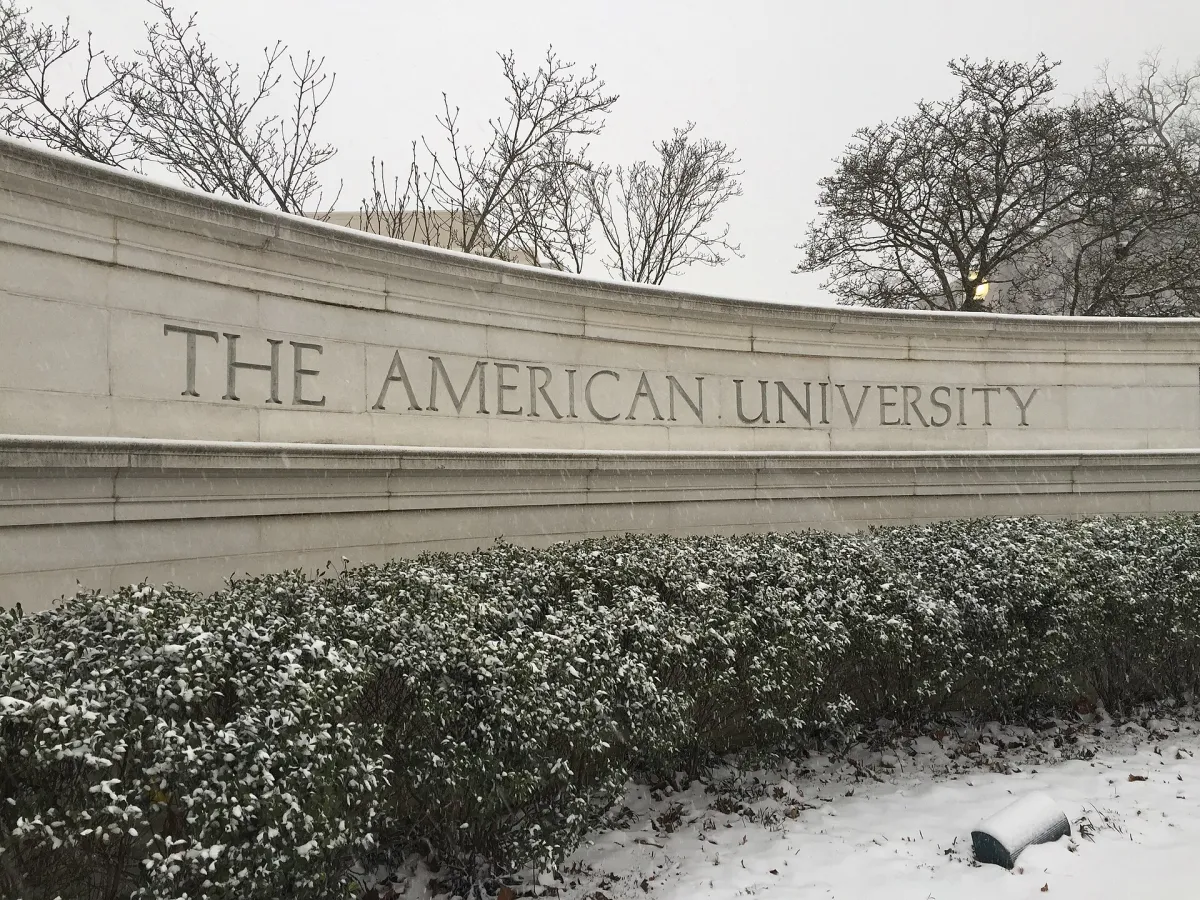
American University, where the Army-funded Special Operations Research Office was housed. A present-day photograph; the office was renamed after Camelot collapsed. Wikimedia Commons — Samschoe, CC BY-SA 4.0

Chile
Chile was to be the first field site, and this is where it collapsed.
The approach to Chilean academics did not say who was paying. Hugo Nuttini, an anthropologist, made contact without disclosing the Army's role in the funding, presenting the work as an academic undertaking.
Johan Galtung, the Norwegian sociologist, had been invited to take part and had refused. He understood what the project was, and he told people — Chilean colleagues and American ones. Once the funding was known, the thing that had been presented as a study of social change read to Chileans as something else entirely: American military money, in the middle of the Cold War, paying to map the conditions under which their country might come apart.
The Chilean press took it up. So did the legislature. The government lodged a formal diplomatic protest with the United States ambassador. The project was cancelled in the summer of 1965, little more than a year after it began, and SORO was subsequently renamed the Center for Research in Social Systems — a change of name for an office whose own had become unusable.
Why it belongs in this archive
Most entries here concern a claim that a government did something concealed. This one is different in a way that is worth being explicit about: nothing in the paragraphs above is alleged. The project existed, the Army funded it, the title is on the contract, and the diplomatic protest is in the record. It was cancelled because it was discovered, not because it was imaginary.
What makes it a conspiracy-archive subject rather than a footnote in the history of sociology is the concealment at the point of contact. The research was not secret in Washington. It was undisclosed in Santiago, to the people being asked to help with it, which is a narrower and more specific wrong than a secret programme and in some ways a worse one. The deception was aimed at the collaborators rather than at the public.
What it actually changed
The consequences ran well past the cancellation, and they are the reason the name still circulates.
For a generation of social scientists, Camelot was the case that made the question where is this money from a standing professional obligation rather than an impolite enquiry. Professional associations in anthropology and sociology developed ethics codes partly in response to it, and the discipline's relationship with government funding has never fully recovered the innocence it had in 1963.
It also supplied a durable template for suspicion. After Camelot, the claim that an apparently academic survey in a foreign country might be a military intelligence instrument stopped being paranoid and became a reasonable question, because it had been true once in a well-documented case. Researchers working abroad have been answering for it ever since, frequently when their funding was entirely innocent.
A note on the name
Anyone searching for Project Camelot today is as likely to find a modern website of that name devoted to UFO and whistleblower interviews, founded decades later and unconnected to any of this.
The two have nothing to do with one another beyond the word. This entry concerns the 1964 Army project, which is the one with a contract, a budget, a director, a diplomatic incident and a termination date.
Where it stands
Confirmed and closed. The Army commissioned a study of how to predict and influence internal war in other countries, placed it in a university, staffed it with distinguished academics, aimed it at Chile without telling the Chileans, and shut it down when they found out.
The open question it left is not about the project. It is about everything that came after it, and whether the suspicion Camelot earned has since been applied to a great deal of research that did not earn it. That is not a question the record can settle, and it is the one the case keeps raising.