
Overview
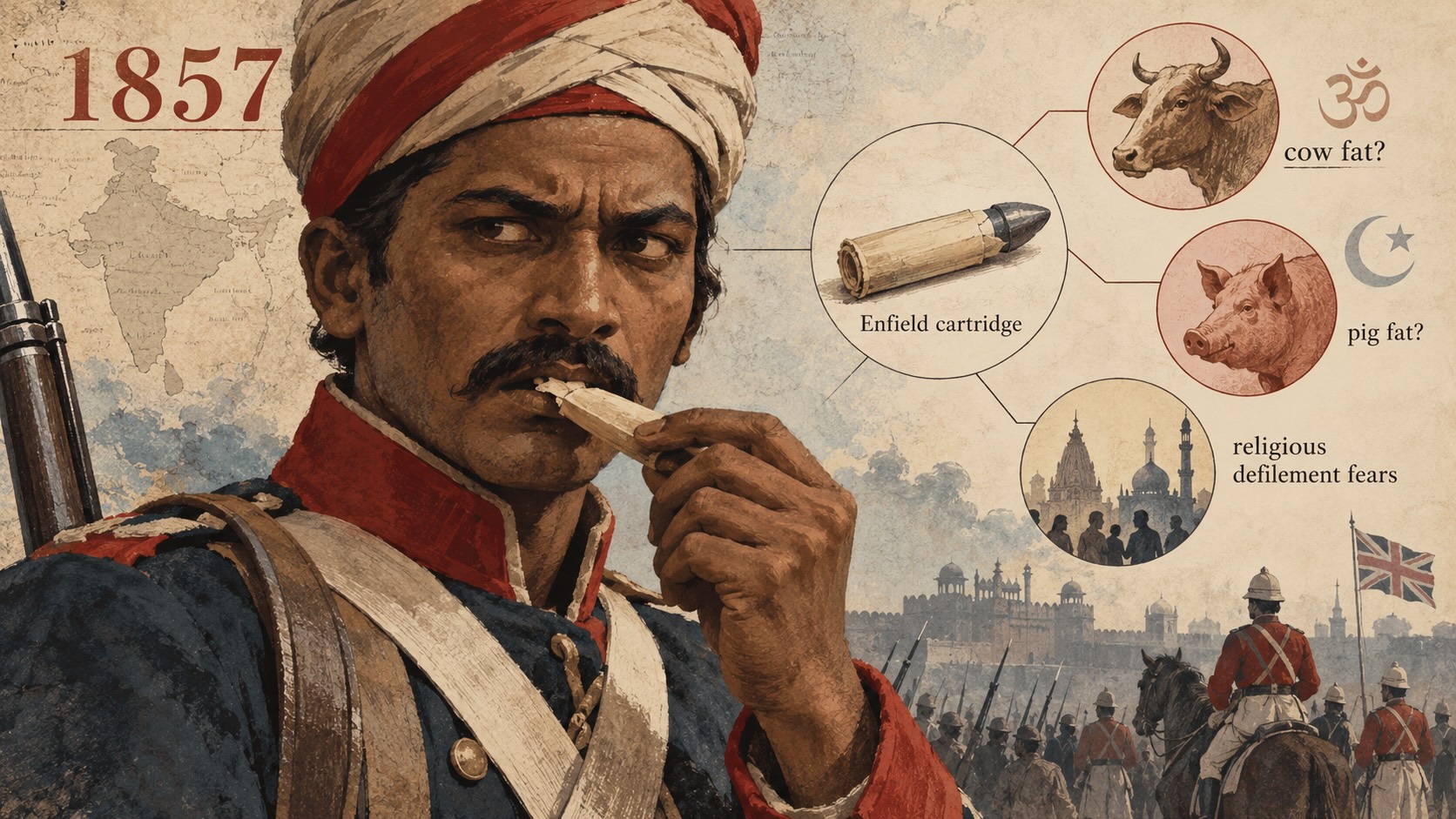
The “greased cartridges” theory was the most famous immediate cause of the Indian Rebellion of 1857. But for many contemporaries it was never just about ammunition. It was about spiritual conquest.
In the conspiratorial version, the cartridge was a test and a weapon at once. By forcing sepoys to bite cartridges greased with pig and cow fat, the British would break Muslim and Hindu religious discipline, collapse caste protections, and open the way for mass conversion to Christianity.
Historical Background
The new Enfield rifle required soldiers to bite open greased paper cartridges before loading. Rumors spread that the grease was made from pig and cow fat—substances repugnant respectively to Muslims and Hindus. Even after British authorities tried to change procedures and reassure the troops, trust had already broken down.
The reason the rumor mattered so much is that it entered an environment already charged with religious suspicion. Many Indians believed British rule was steadily undermining inherited customs and preparing a deeper cultural takeover.
Core Claim
The central claim was that the cartridge issue was deliberate, not accidental.
Religious defilement as policy
One version said the British wanted sepoys to commit acts that would pollute them spiritually and socially.
Breaking caste and loyalty
Another version held that once caste boundaries were broken, soldiers would become easier to detach from their communities and traditions.
Christianity by stealth
The strongest form of the theory said the cartridges were part of a long program of covert conversion—Christianity introduced not openly but through military routine and daily humiliation.
Why the Theory Spread
The theory spread because it fit existing fears too well. Changes in law, education, social policy, and missionary presence had already made many Indians suspicious that British rulers were interfering with religion. The cartridge rumor seemed to confirm the worst.
It also spread because military drill required biting the cartridge with the teeth. This made the act immediate and bodily. There was no way to keep the offense abstract.
What Is Documented
The Enfield cartridges were indeed greased, and the issue became the famous military trigger of the 1857 rebellion. Britannica and other standard historical accounts note that the grease was associated with pig and cow fat and that the offense to Muslim and Hindu soldiers was immediate. Historians also emphasize that the soldiers’ reaction reflected broader fears that British rule was undermining religion, caste, and customary order.
What Is Not Fully Proven
What remains less certain is the strongest conspiracy claim: that British authorities designed the cartridges specifically to force mass conversion to Christianity. The evidence strongly supports religious arrogance, insensitivity, and a wider atmosphere of conversion fear. It does not conclusively prove a centrally planned cartridge-conversion scheme.
Significance
The greased-cartridge theory remains important because it shows how colonial power can make even military routine feel like a religious attack. Whether or not the cartridges were meant as an explicit conversion instrument, many Indians believed they were, and that belief helped ignite one of the most consequential uprisings in imperial history.