
The publication
On 25 October 1924, four days before a general election, the Daily Mail printed a document it described as a letter from Grigory Zinoviev, head of the Communist International, to the Communist Party of Great Britain. The letter urged British communists to agitate within the armed forces and prepare for revolution.
Britain had its first Labour government, under Ramsay MacDonald, and that government was in the middle of negotiating treaties with the Soviet Union. A Soviet instruction to subvert the British army, arriving on the eve of polling, was the most damaging document that could have been produced. Labour lost the election on 29 October.
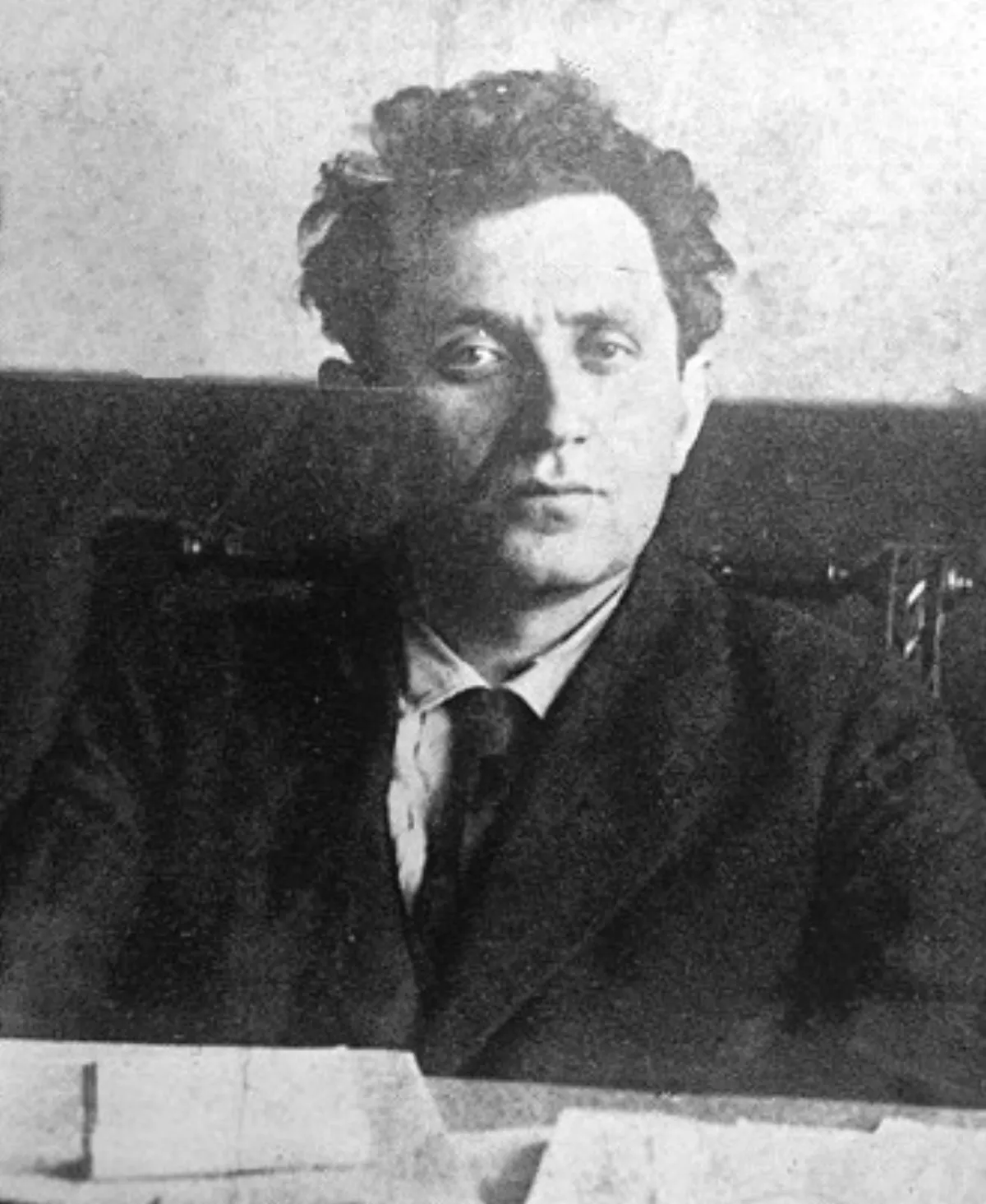
Wikimedia Commons — Unknown (Bain News Service, publisher), Public domain

The route to the front page
The letter bore the date 15 September 1924. The Foreign Office received it on 10 October — two days after MacDonald's government had been defeated on a motion of no confidence, which is to say two days after an election became certain.
What it urged was sedition of a specific and well-targeted kind. It predicted that normalising Anglo-Soviet relations would revolutionise the British proletariat and open the way for propagandising Leninism in England and the colonies, and it directed British communists accordingly, including within the armed forces. Each element was calculated to make the treaties under negotiation look like an instrument of subversion rather than of trade.
Getting it from a Whitehall in-tray to the Daily Mail required people to act. The historians Chester, Fay and Young described the combination of Conservative politicians and Foreign Office officials who secured its publication as a conspiracy, and the word is theirs rather than a later embellishment. Gill Bennett's own assessment of Desmond Morton, one of the intelligence officials through whose hands it passed, is pointed on the question of belief: she doubted he thought it genuine, but he treated it as if it was.
That is the sharpest formulation available of what happened here. The forgery did not need its handlers to be deceived. It needed them to find it useful.
What was wrong with it
The most striking fact about the letter is a simple absence. No original has ever been found. What circulated in Whitehall and reached the press was a copy, and the document behind it has never been traced.
Zinoviev denied writing it. The denial counted for little at the time, which is unsurprising, and it has not been the basis of any later finding either — the case against authenticity does not rest on the word of the man it was attributed to.
The official investigation
In 1998 the Foreign Secretary, Robin Cook, did something unusual: he asked his own department's historians to establish what had happened. The investigation was conducted by Gill Bennett, the Chief Historian at the Foreign and Commonwealth Office, and she was given access to Secret Intelligence Service papers as well as the Foreign Office archives. Her report was published in February 1999 as one of the department's History Notes.
Its conclusion was that the letter was a forgery. On the question of who made it, Bennett's finding pointed away from the most popular suspect: she concluded it was probably written by White Russians in Latvia, émigrés opposed to the Anglo-Soviet treaties then under negotiation, and that it was unlikely to have been directly the work of MI6 officers.
That distinction is worth holding on to, because the two versions of this story are not the same story. One is a foreign forgery that British institutions failed to catch and then amplified. The other is a British intelligence operation against an elected British government. The official investigation, with access to the intelligence files, landed on the first.
What that leaves unresolved
Bennett's report did not clear everybody of everything, and the popular account is not simply wrong — it is imprecise about a question the report treats carefully.
The letter did not travel from Riga to the front page of the Daily Mail unassisted. It passed through British intelligence and the Foreign Office, and the circumstances of its circulation and leak involve officials who were hostile to the Labour government and to the Soviet treaties. The distance between forging a document and ensuring a forged document reaches a newspaper four days before an election is real, and the second is the part of the affair that stayed contentious after 1999.
The electoral effect is not merely unsettled — the popular version has it backwards. Labour's share of the vote went slightly up in 1924. What destroyed MacDonald's government was the collapse of the Liberal vote and the arithmetic of a three-party contest, which delivered a Conservative landslide on a Labour vote that had grown. Most historians judge the letter's direct effect on Labour's own support to have been small, and locate its real work elsewhere: in helping the Conservatives gather frightened Liberals.
There is a further irony that the Labour Party did not benefit from. The letter handed it an excellent explanation for a defeat that had other causes, and an excellent explanation for a defeat is not always a useful thing to have — it postpones the question of what else went wrong.
So the claim that a forgery decided a British general election is the most repeated part of this episode and the least supportable. The forgery was real. The decision was made by the electoral system.
Why it has lasted
The Zinoviev letter has had a century of afterlife, and it is cited in two directions at once.
It is used to argue that intelligence services interfere in domestic elections, which the official finding does not support in the strong form. And it is used to argue the reverse — that allegations of foreign election interference are typically manufactured — which the finding does not support either, since the document really was a fabrication designed to affect a vote.
What the case actually offers is a well-documented example of a narrower thing: a forged document, of foreign origin, that was taken seriously by the institutions it passed through because it told them what they already believed, and that reached the public at the moment of maximum effect. The forgery was never traced to an original. The government that was damaged by it eventually commissioned the investigation that established it was false — seventy-four years later, by which time everyone who might have been held to account was dead.