
Overview
Marilyn Monroe was found dead at her home in Brentwood in the early hours of 5 August 1962. She was thirty-six. The county coroner's finding was acute barbiturate poisoning, classified as probable suicide.
The murder theory has been in circulation almost since that morning, and it takes several forms with different accused parties — the Kennedys, organised crime, intelligence services, or some arrangement between them. What they share is the proposition that Monroe knew something that made her death useful to someone.
Unusually for a celebrity death conspiracy, the case has been formally re-examined by prosecutors, and the resulting document is public. It is also more equivocal than either side usually reports.
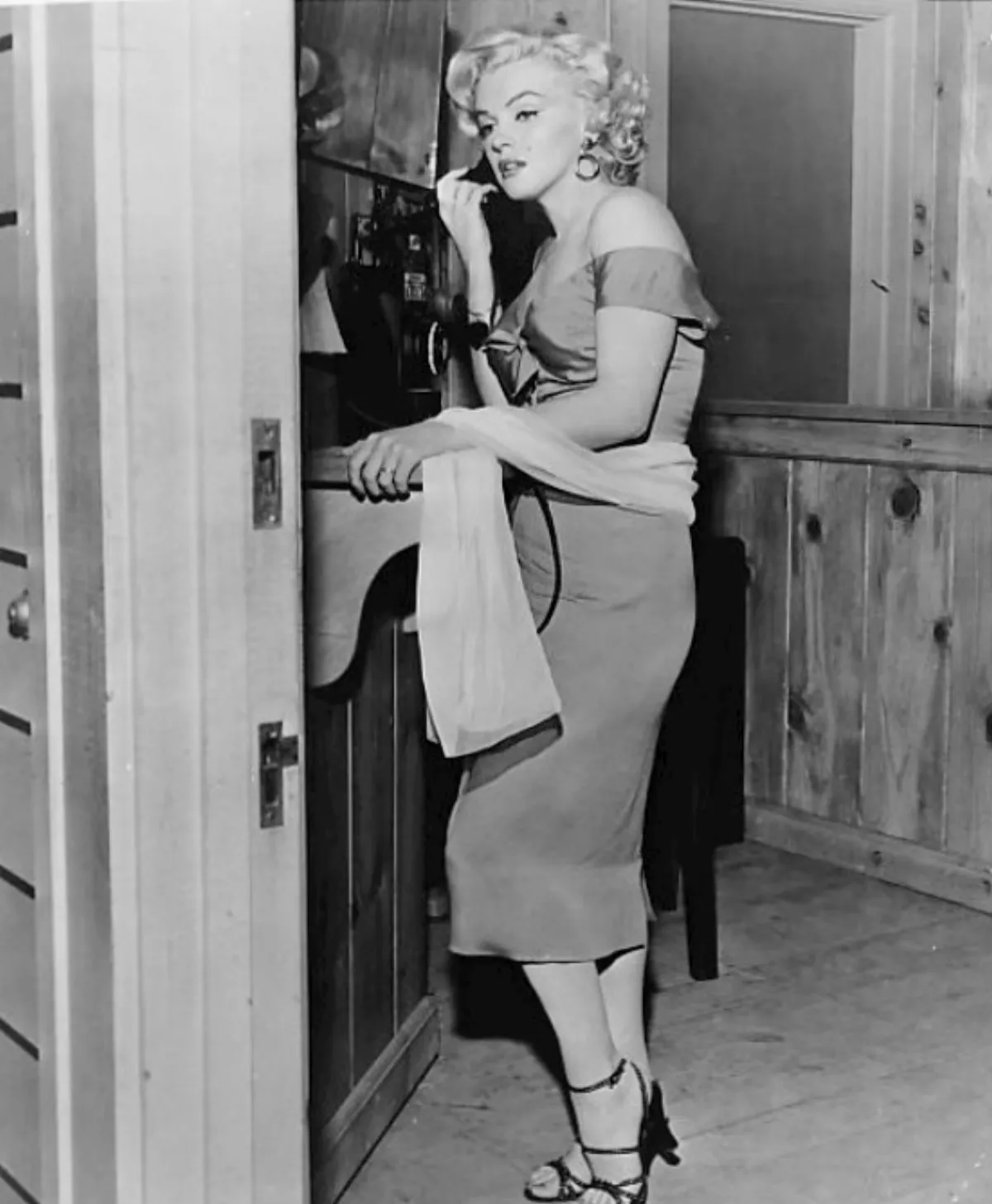
Wikimedia Commons — 20th Century Fox, Public domain

What the 1982 review found
Twenty years after the death, the Los Angeles County District Attorney's office conducted a four-month inquiry in response to persistent claims of foul play. The report, prepared by Assistant District Attorney Ronald Carroll, ran to twenty-nine pages.
Its headline conclusion was that there was no credible evidence supporting a murder theory. On the autopsy, it found that Thomas Noguchi — who performed it, and who later became county coroner — had done competent work, and that his conclusion of probable suicide was reasonably supported by the data he had examined.
That is the finding usually cited to close the subject, and on the central question it does.
The same report, however, acknowledged that factual discrepancies in the case remained unresolved. A prosecutorial review saying both that no murder evidence exists and that parts of the record do not fit is a more complicated document than the summary suggests, and both camps have quoted it selectively ever since.
The evidence that no longer exists
The most consequential problem is physical, and it is the reason the argument cannot be settled by re-examination.
Barbiturates swallowed in capsule form leave traces in the digestive tract. Barbiturates introduced another way do not. Tissue samples taken at autopsy — including from the stomach and liver — were the material that could have distinguished between the two, and they disappeared from the coroner's office before any such analysis was completed.
The significance of that loss depends on what you think caused it. Read one way, it is exactly the evidence a murderer would need removed, and its disappearance from a government office is itself suspicious. Read another, it is a 1962 coroner's office with poor custody procedures losing material in a case that had not yet become historic, which was neither rare nor sinister at the time.
What is not in dispute is the consequence. The question of how the drugs entered her body cannot now be answered from the physical evidence, because the physical evidence is gone.
Noguchi himself returned to the case in print years later, and his account is not a defence of how it was handled. He described the loss of the samples as a serious failure, and said that with hindsight he should have pressed harder to examine the scene himself and to secure the material before it left his office. A pathologist who stands by his own finding while saying the investigation around it was inadequate is a more useful witness than either camp treats him as.
The circumstantial case
The murder argument rests on the hours around the death rather than on the toxicology.
Accounts of that night from the people present — her housekeeper Eunice Murray and her psychiatrist Ralph Greenson among them — shifted over subsequent decades in ways that critics regard as significant and defenders attribute to memory, repetition and pressure from interviewers over twenty years. The timeline of when she was found, when doctors were called and when police were notified has never been fully reconciled.
Surrounding this is the political material: her documented association with the Kennedy circle, and the surveillance environment of the period. The FBI held files that touched on her, and its records show the bureau was aware of the murder theories circulating and examined them, which is not the same as endorsing them. Some of the most-cited documents in this area are of contested provenance.
Why the Kennedys
The political version needs explaining on its own terms, because it did not arrive with the death.
In August 1962 the newspapers reported a barbiturate overdose. The Kennedy connection became central to the story later, built from her documented presence in that social circle, from the timing relative to her performance at the president's birthday gala that May, and from claims about a diary or notebook said to contain political material. No such document has been produced in sixty years.
Much of the specific evidence offered for the political theory has provenance problems. Several documents circulated as proof of surveillance or of official knowledge have been assessed as fabrications or remain unauthenticated, and the more confident retellings tend to depend on them. The FBI's own files show it was aware of the theories and looked at them, which supporters cite as significance and sceptics as routine.
The underlying difficulty is that a genuine association is doing a great deal of work. That Monroe knew these people is documented. That she knew something worth killing her for is inferred entirely from the fact that she died.
The case for the official finding
The argument for suicide or accidental overdose does not depend on dismissing any of the above.
Monroe had a documented history of barbiturate use at a period when such drugs were prescribed freely and their interactions poorly understood, and she had previously been hospitalised. The quantity found was consistent with the finding. Her professional and personal circumstances in 1962 were difficult by any reading.
The practical objection to the murder theories is the same one that applies to many of them: the number of people who would have had to participate and stay silent for sixty years, across a coroner's office, a police department and at least one federal agency, with no participant ever producing a document or a deathbed account that withstood scrutiny.
The numbers the argument runs on
The article of the case that gets argued hardest is the toxicology, and it is worth putting the figures on the page rather than gesturing at "a lethal dose".
The analysis found acute barbiturate poisoning: 8 mg% chloral hydrate and 4.5 mg% pentobarbital in the blood, and a further 13 mg% of pentobarbital in the liver. Empty bottles of both medicines were beside the bed. From the state of rigor mortis, death was estimated to have occurred between 8:30 and 10:30 on the evening of 4 August.
The liver reading is the one that carries weight in the argument, because it is substantially higher than the blood level, which is the pattern produced when a drug has been absorbed and processed over a period rather than delivered all at once. Any account involving injection or a rapid non-oral route has to accommodate that distribution. This is also precisely why the missing tissue samples mattered so much: the liver figure constrains the question without settling it, and the material that could have settled it is gone.
What the District Attorney actually said
The 1982 finding is usually quoted as a flat verdict. Van de Kamp's own language was more careful than that, and the careful part is the interesting part.
He said it appeared Monroe had died by suicide or accidental overdose, and then added a qualification about intent that most summaries drop: "It is possible that while her ingestion of a lethal quantity of barbiturates was voluntary, she may have been in such a state of emotional confusion that she herself lacked a clearly formed purpose."
That is a prosecutor declining to choose between suicide and accident, on the grounds that the distinction requires knowing a state of mind that the evidence cannot reach. It is the opposite of the closed-case reading, and it comes from the document the closed-case reading rests on.
He closed by asking that Monroe "be permitted to rest in peace", which is not a finding at all, and is quoted as if it were one about as often.
Why it has not closed
Because the official record contains a real hole, and an official acknowledgement of it.
Most celebrity death conspiracies require the claimant to reject the evidence. This one does not, quite. The prosecutors who reviewed the case said the autopsy was sound and no murder evidence existed, and also that things did not add up. The samples that would have resolved the central mechanical question were lost from official custody. The witness accounts changed.
None of that is proof of anything. But it means the sceptical position is not that the case is clean — it is that an untidy case is what an untidy case looks like, and that untidiness is not evidence of design. The opposing position is that a case this consequential should not have been untidy, and that the specific things which went missing were the specific things that mattered.
Those two readings have now coexisted for six decades, working from the same twenty-nine-page report.