
What happened
On 20 July 1993 Vincent Foster, Deputy White House Counsel and a friend of the Clintons since Arkansas, was found dead at Fort Marcy Park, off the George Washington Memorial Parkway in Virginia. He was holding a Colt .38 Special in his right hand. The autopsy concluded he had died from a single shot into the mouth, from the gun found at the scene.
He had been in the job six months. The White House travel office affair had gone badly, he had been attacked in editorials, and people around him had noticed he was not well.
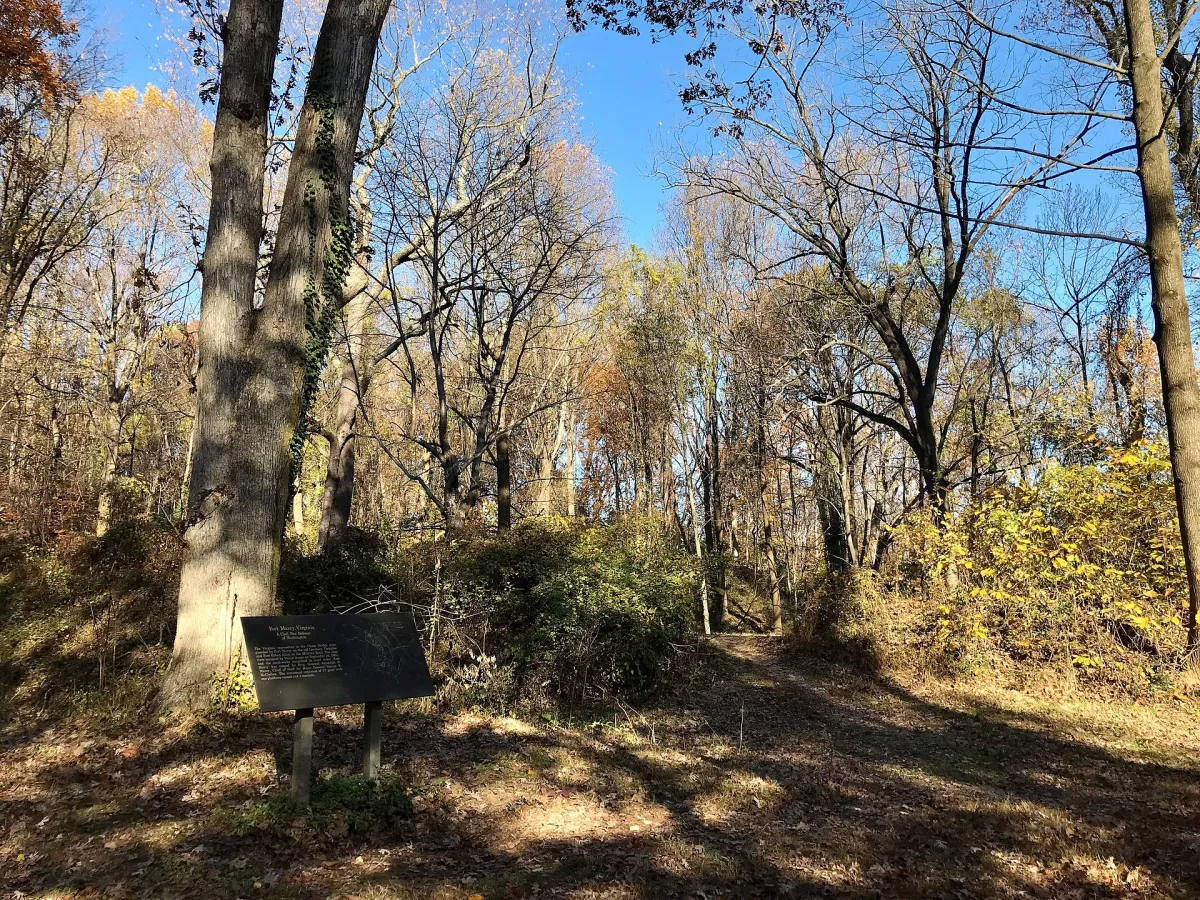
Fort Marcy Park, off the George Washington Memorial Parkway in Virginia, where Foster was found on 20 July 1993. Wikimedia Commons — Eric T Gunther, CC BY 3.0

Five inquiries
The number matters, because the theory treats each additional investigation as further evidence of management rather than as further examination.
The United States Park Police investigated first, with FBI assistance. The Arlington County medical examiner reviewed the death. Robert Fiske, appointed regulatory Independent Counsel in January 1994, reported on 30 June 1994. A Senate special committee examined it. Kenneth Starr's Office of Independent Counsel issued its report on 10 October 1997.
All five concluded suicide.
Two of Starr's specific findings go directly to the murder claim rather than around it: that Foster owned the handgun, and that the body had not been moved from its position before the police found it. The second disposes of the staged-scene version, in which Fort Marcy is a disposal site rather than the place of death.
Fiske's finding went to motive. He reported no evidence that Whitewater, Madison Guaranty or Capital Management Services played any part in the death — which is the specific link the theory requires, examined and not found.
The part that is genuinely bad
The theory did not survive for thirty years on nothing. It survived on procedure, and the procedure was poor in ways that are documented and were criticised at the time.
The note. A note torn into twenty-seven pieces was found in Foster's briefcase on 26 July — six days after his death, in a briefcase that had already been looked through. Bernard Nussbaum, the White House Counsel, handled it before it reached the police on 27 July. Its contents were not made public by the Justice Department until 10 August.
What it said was consistent with everything else: distress about the travel office business, an insistence that he did not knowingly violate any law, and the line that has outlived him — I was not meant for the job or the spotlight of public life in Washington.
Three handwriting experts engaged by critics said it was forged. Analyses by the Capitol Police and the FBI found the handwriting authentic.
The documents. On 22 July, two days after the death, Whitewater files were removed from Foster's office and sent to the Clintons' personal attorney. This happened before investigators had secured the office, and it is the subject of its own section of the Independent Counsel's report.
That is not a small thing and it should not be minimised. Material relating to a matter under political scrutiny was taken out of a dead official's office by his colleagues and routed to the family's private lawyer. It would be grounds for suspicion in any case, anywhere.
What the grievance does and does not establish
Here is the distinction the theory collapses, and it is the whole point of this entry.
Removing those documents is evidence that the White House behaved improperly about Whitewater. It is not evidence about how Foster died. The two questions are separate, and the conduct that looks worst — the files, the delay, the counsel handling the note before the police — all concerns what happened after a death that five investigations examined on its own physical evidence.
A White House that is covering up a murder would behave roughly like this. So would a White House that is protecting a politically damaging file after an ordinary suicide. The behaviour does not discriminate between those, and the physical findings do.
What has not been produced
In thirty years: no witness, no forensic finding inconsistent with the autopsy, no account from anyone involved, no document. The gun was his. The body had not been moved. The handwriting was examined by two agencies and found genuine.
The theory's energy has come instead from the number of reviews — read as a cover-up requiring repeated maintenance rather than as a question repeatedly asked — and from the fact that the people around Foster plainly did do something they should not have done, two days after he died, with a box of files.
Where it stands
A man in visible distress shot himself in a park six months into a job he had told people he was not suited to, and his colleagues then handled the aftermath in a way that invited every suspicion that followed.
No evidence has been produced that he was killed. The thing that did happen — the removal of Whitewater documents from his office before it was secured — is documented, was reported on by the Independent Counsel, and remains a legitimate criticism of the Clinton White House that does not require anybody to have been murdered.