
Overview
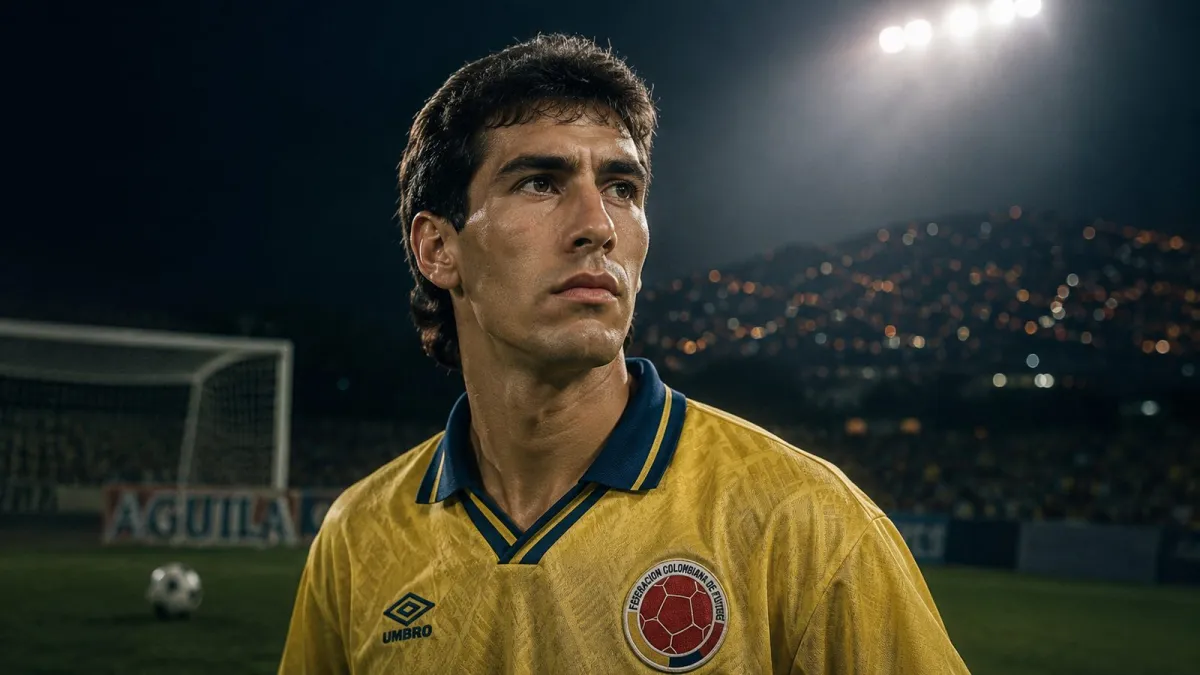
Andrés Escobar Saldarriaga, a 27-year-old central defender known for his composure and nicknamed "The Gentleman of Football," was one of the stars of a Colombia side that arrived at the 1994 World Cup in the United States as dark-horse favourites — Pelé had even tipped them to win. Instead, Colombia were eliminated in the group stage, and within two weeks Escobar was murdered in his home city of Medellín. The case sits at the intersection of football and Colombia's drug-war era and remains one of the sport's darkest episodes.
The Own Goal
On 22 June 1994, in a must-win group match against the host United States, Escobar stretched to cut out a cross and instead deflected the ball past his own goalkeeper. The USA won 2–1, and a tournament that had carried enormous national expectation collapsed into early elimination. The result was a financial catastrophe for those who had bet on Colombia to progress.
The Murder
On 2 July 1994, Escobar was confronted by several people in a car park outside a bar in the Las Palmas area of Medellín. After an argument he was shot six times. According to widely repeated accounts, the gunman shouted "¡Gol!" with each shot, echoing the cadence of a match commentator. Escobar died shortly afterwards.
The Conspiracy
The dominant theory is that the killing was tied to organised crime and gambling. Colombian football of that era was heavily financed by drug traffickers — Pablo Escobar (no relation) famously bankrolled Atlético Nacional — and enormous illegal bets rode on the national team. The argument holds that powerful, cartel-connected gamblers lost fortunes on Colombia's failure, and that Escobar's death was retribution or a message.
Suspicion deepened with the conviction: Humberto Castro Muñoz, a bodyguard and driver linked to the Gallón brothers (Pedro and Juan Santiago Gallón, associates of the drug underworld), was sentenced to 43 years but served roughly eleven before his release. To many, the reduced time confirmed that influential interests shielded those truly responsible.
Counterpoints
Some accounts frame the shooting as a spontaneous, alcohol-fuelled altercation in a parking lot rather than a contract killing, noting that no higher conspirators were ever charged and that the gambling motive, while plausible, was never proven in court. Others maintain that the broader narco-football context makes a simple bar dispute implausible. The full chain of responsibility has never been established.
Legacy
Escobar's funeral drew an estimated 120,000 mourners. His death became a symbol of how deeply Colombia's drug economy had penetrated its national life, and is the subject of extensive journalism and film, most notably the documentary that pairs his story with that of Pablo Escobar and the phenomenon of "narco-fútbol."