
Overview
The Man from Taured is one of the most famous “impossible traveler” stories in modern mystery lore. In the standard telling, a well-dressed businessman arrives at Tokyo’s Haneda Airport in the mid-twentieth century carrying a valid-looking passport, business papers, money from multiple countries, and a calm confidence that everything about his trip is routine. The problem begins when officials inspect his passport and discover that his country of origin is listed as Taured — a nation no one in the room has ever heard of and no map can locate.
When questioned, the traveler does not behave like a fraud caught in a lie. He becomes confused and frustrated. He insists Taured is a real country, says it has existed for centuries, and points to the border region between France and Spain where officials know only Andorra. From there the story shifts from bureaucratic confusion into full anomaly. The man is detained for further investigation, placed under guard in a hotel room, and by the next morning has disappeared completely, leaving no trace except his impossible documents and the memory of a country that should not exist.
In the hidden-history and parallel-world reading, the Man from Taured is not simply a traveler with false papers. He is a human boundary event: someone who crossed from a neighboring reality, a shifted timeline, or an alternate geopolitical worldline into our own.
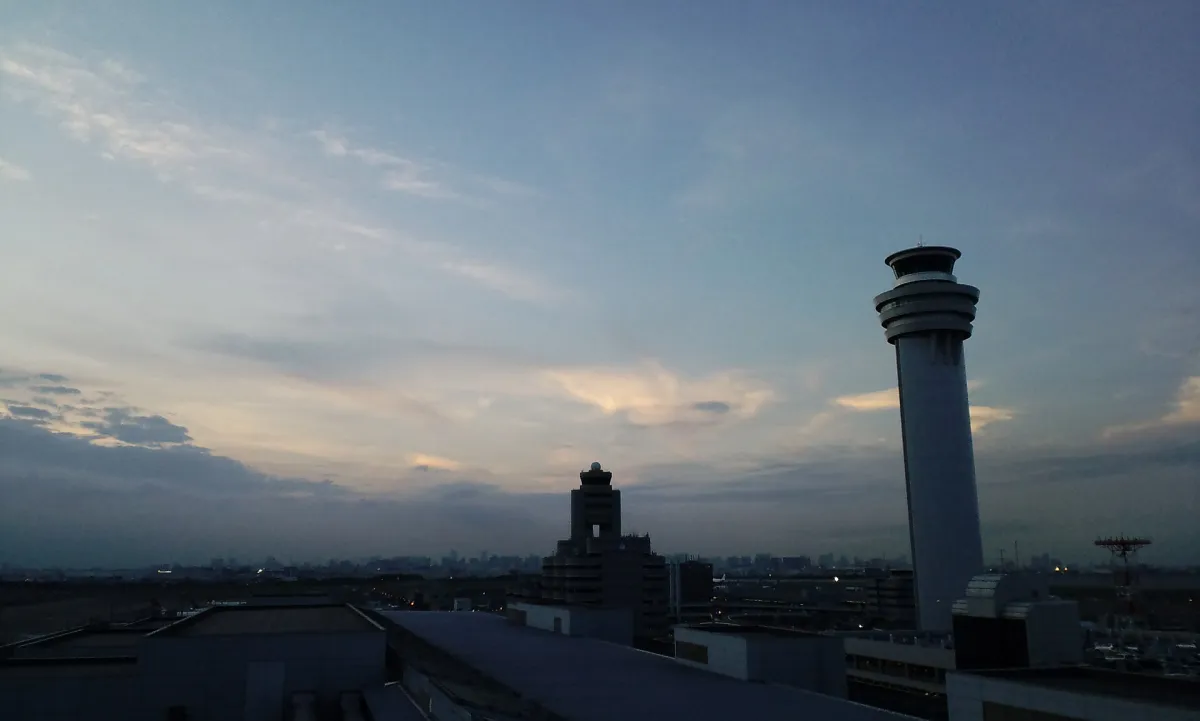
Wikimedia Commons — MIKI Yoshihito, CC BY 2.0
.jpg)
The Core Legend
The standard version of the story usually contains the same set of key elements:
- the year is often given as 1954,
- the location is Haneda Airport in Tokyo,
- the traveler is described as Caucasian, well dressed, and businesslike,
- his passport appears authentic and contains previous stamps,
- he says he is from Taured,
- he identifies Taured as lying in the Pyrenees region between France and Spain,
- officials cannot find Taured on any map,
- he is detained overnight in a guarded hotel,
- and by morning he has vanished, along with his papers.
These elements are what transformed the story from an odd border-control incident into a full interdimensional legend. The key to the story is not just the country name. It is the traveler’s confidence. He does not present as someone improvising under pressure. He behaves like a man whose map of the world is not the same as everyone else’s.
Why the Story Feels So Powerful
The Taured story has unusual force because it strikes at one of the most basic human assumptions: that geography is stable. Maps, passports, and borders are among the most official realities in modern life. A traveler from a country that does not exist destabilizes all three at once:
- political reality,
- documentary identity,
- and the reliability of the world map.
The legend also uses the logic of ordinary bureaucracy to create extraordinary tension. The airport is not a magical site. It is a checkpoint of modern certainty. That is why the story works so well. The impossible arrives not in a haunted forest or mystical ruin, but under fluorescent administrative scrutiny.
The Passport
The passport is the story’s central object. In the legend, it is not a crude fake. It appears legitimate enough to pass initial inspection. It contains stamps and visas that suggest the man has traveled internationally before, and his supporting documents match his identity well enough to deepen the confusion rather than resolve it.
Within the lore, the passport represents more than travel credentials. It functions as evidence that Taured exists in some official system somewhere. That is what gives the story its deeper mystery. A delusional man can claim anything. A passport, business papers, and multiple corroborating documents suggest a whole world behind the claim.
The Map Scene
One of the most repeated scenes in retellings is the moment officials present the traveler with a map of Europe and ask him to identify Taured. He points, with frustration or certainty, to the region where Andorra should be. He may even insist that Taured has occupied that territory for hundreds or thousands of years and express disbelief that the officials know only Andorra.
This scene is the legend’s emotional center. The story does not merely say, “he named a fake country.” It says that when confronted with our geography, he saw a different reality in the same space. That single gesture — pointing to a place that exists, but naming it differently — is what turned Taured into a parallel-world story rather than just a passport fraud tale.
The Hotel Disappearance
The second great pillar of the legend is the disappearance. After officials cannot resolve the matter at the airport, the traveler is placed under guard in a hotel room while further inquiries are made. He is said to be on an upper floor, watched closely, and stripped of easy avenues of escape. Yet by morning he is gone.
In the fullest versions of the story:
- the guards remain outside,
- the room is locked,
- the windows are too high or inaccessible for a practical escape,
- and his documents vanish with him.
This disappearance is what seals the legend. Without it, the story could remain in the realm of forged documents or espionage. With it, the case becomes metaphysical. The traveler does not just fail to fit the world; he exits it.
Taured as a Parallel-State Theory
The most popular interpretive model around the legend is that Taured was real — but not in this timeline. In this view, the traveler came from a worldline in which the state we know as Andorra either never existed or had been replaced by Taured. The differences between realities were close enough that:
- airlines,
- passport systems,
- and business routes looked familiar, but not close enough for the geopolitical naming to match.
This interpretation is attractive because it preserves almost every detail of the legend without requiring the traveler to be deceptive. He is not lying. He is dislocated.
Time Slip vs. Parallel Universe
Two major metaphysical readings dominate the Taured lore.
1. Parallel Universe Reading
The traveler came from a neighboring reality in which national boundaries and names diverged from ours.
2. Time Slip / Timeline Divergence Reading
The traveler came from an altered historical branch — not necessarily a full separate universe, but a timeline that split from ours at some earlier point, producing a different European political map.
The difference matters because the first reading emphasizes dimensional travel, while the second emphasizes alternate history. In both cases, the passport becomes a state artifact from another line of reality.
The Bureaucratic Authenticity Problem
One reason the legend stayed strong is that it does not rely only on one strange claim. The traveler reportedly had:
- a passport,
- company papers,
- money,
- prior travel history,
- hotel reservations or business plans,
- and the demeanor of a routine international businessman.
This creates what might be called the bureaucratic authenticity problem. If he were merely pretending, why would every surrounding detail appear so stable? The legend’s strength lies in the way it multiplies ordinary confirmations around an extraordinary core.
The “Third Trip This Year” Detail
Many versions say the traveler insisted this was his third trip to Japan that year. This is one of the subtler but most effective details in the story. It suggests repetition, normalcy, and previous successful passage. The traveler does not behave as though he has entered a strange new world. He behaves as though everyone else has gone mad or forgotten a basic geopolitical fact.
This detail deepens the parallel-world reading. If he had been crossing between near-identical worlds unknowingly, then perhaps only this trip went wrong because some bureaucratic checkpoint intersected with the divergence.
The Businessman Archetype
The legend always frames the traveler as ordinary in the most controlled possible way:
- not a mystic,
- not a drifter,
- not a criminal type,
- but a businessman.
This matters because business travel belongs to the world of schedules, institutions, and paperwork. It makes the impossibility sharper. A man from another dimension should not arrive as a mundane account-holder with a briefcase and routine irritation. But that is exactly why the image remains so memorable.
The Name “Taured”
The country name itself has generated extensive speculation. In the fully developed modern legend, Taured sounds close enough to recognizable European naming patterns to feel plausible, yet unfamiliar enough to trigger unease. It is not a completely alien word. It sounds like a country that almost exists.
That “near-recognition” quality is part of the legend’s architecture. Taured feels like a ghost-state: one phonetic step away from legitimacy.
The Zegrus Connection
A major strand of later research connected the Taured legend to a real case involving John Allen Kuchar Zegrus, a man detained in Japan in 1959–1960 over document issues and counterfeit checks. Public reference works note that Zegrus was called a “mystery man” in Japanese news and that later retellings transformed details of his case. In this documented incident, newspaper reports described a passport tied to a place rendered as Taured or connected to Tuareg/Tamanrasset traditions in Africa, not a vanished Pyrenean state. Over time, these details appear to have been reshaped into the now-familiar 1954 Haneda / Andorra / hotel-vanishing narrative.
Inside the broader Taured mythology, this historical layer functions in two different ways. For some, it is the seed from which the full legend grew. For others, it is the public-world echo of a stranger event that later became cleaned up or displaced through ordinary explanation. In both readings, the Zegrus case became inseparable from the story’s modern structure.
The 1954 Date
The year 1954 is one of the most repeated details in the modern Taured narrative, but the documented historical traces point in a more complex direction. Public summaries note that a highly embellished “man from another dimension” form of the story appears later than the real Zegrus case and that some print references in the twentieth century helped harden the now-canonical version. This date drift itself became part of the lore. The story behaves as though it has moved through time while preserving its emotional truth more strongly than its archival precision.
This gives the legend an unusual structure: the more it circulates, the more mythically stable it becomes, even when its documentary anchors remain layered and uneven.
The 1981 Print Anchor
One of the most cited early modern print appearances of the “Taured” form of the story is The Directory of Possibilities by Colin Wilson and John Grant, published in 1981. That reference is often treated as a key checkpoint in the emergence of the story into the Anglophone mystery tradition. By then, the tale had already acquired the shape most people now recognize:
- impossible country,
- Tokyo airport,
- and a baffled traveler from somewhere just outside our world.
This is important because it shows the legend’s movement from local or newspaper-scale anomaly into compiled mystery literature, where it could be detached from any one underlying case and become a portable modern myth.
Why the Story Is Read as Parallel-Reality Evidence
The Man from Taured became one of the canonical “parallel universe” stories because it offers several features rarely present together:
- a complete identity,
- state documents,
- a map disagreement,
- prior travel history,
- detention under controlled conditions,
- and a closed-room disappearance.
It does not read like a ghost story. It reads like an administrative collision between two realities.
This is why the story is frequently grouped with:
- timeline slip cases,
- place-memory anomalies,
- impossible travelers,
- and stories of people who arrive with valid artifacts from worlds adjacent to ours.
The Airport as Liminal Zone
Airports are transitional spaces:
- one country to another,
- one language system to another,
- one legal regime to another.
The Taured story gains force because it takes place in exactly such a liminal setting. If worlds could overlap, an airport is one of the places where the overlap would feel most narratively appropriate. It is already a machine for moving between official realities. The legend intensifies that function until the traveler is crossing not only borders, but dimensions.
The Guarded-Room Motif
The guarded hotel room has become one of the most significant symbolic features in the story. In folklore terms, it is the modern equivalent of a sealed chamber. It says:
- the witness was contained,
- escape was controlled against,
- ordinary explanations were ruled out,
- and yet disappearance still occurred.
This motif moves the story beyond border confusion into genuine anomaly. The room becomes a threshold space where our world briefly held the traveler and then failed to hold him.
Main Interpretive Models
1. Parallel Universe Traveler Model
The man genuinely came from a nearby world in which Taured existed where Andorra exists in ours.
2. Divergent Timeline Model
The traveler came from an alternate historical branch whose political geography differed only slightly from our own.
3. Zegrus-Seed Model
A real Japanese mystery-man case involving John Allen Kuchar Zegrus became transformed over decades into the fully mythic Taured legend.
4. Controlled-Records Model
The traveler’s papers and disappearance suggest an incident that intersected with official systems in a way that was later partially flattened into safer public forms.
5. Impossible Traveler Archetype
Taured is the defining modern example of the impossible traveler: a person carrying documentary proof of a place that belongs to another reality.
Conclusion
The Man from Taured remains one of the most concentrated parallel-world legends in modern culture because it joins geography, identity, bureaucracy, and disappearance into one clean narrative line. A traveler arrives with the wrong country but the right paperwork, points to a place we know under another name, and then exits the locked structure meant to contain him.
Whether read as a transformed historical case, a timeline-slip narrative, or a direct account of interdimensional border error, the Taured story remains one of the clearest expressions of a modern metaphysical fear: that our maps are only one version of the world, and that sometimes someone arrives carrying proof of another.