
Overview
The "Mayan Miscalculation" theory treats the failure of the 2012 apocalypse not as disproof, but as confirmation in disguised form. According to the theory, the world did end on or around December 21, 2012, but the ending was ontological rather than physical. Reality did not explode. It flattened, repeated, or rendered itself into a lower, more static state.
This theory is distinctive because it emerges after the prophecy date, not before it. The lack of visible catastrophe becomes the theory’s central mechanism. A failed apocalypse is reinterpreted as a hidden transition into a holographic afterworld, simulation loop, or timeline shell in which people continue living without realizing that the original reality has already ceased.
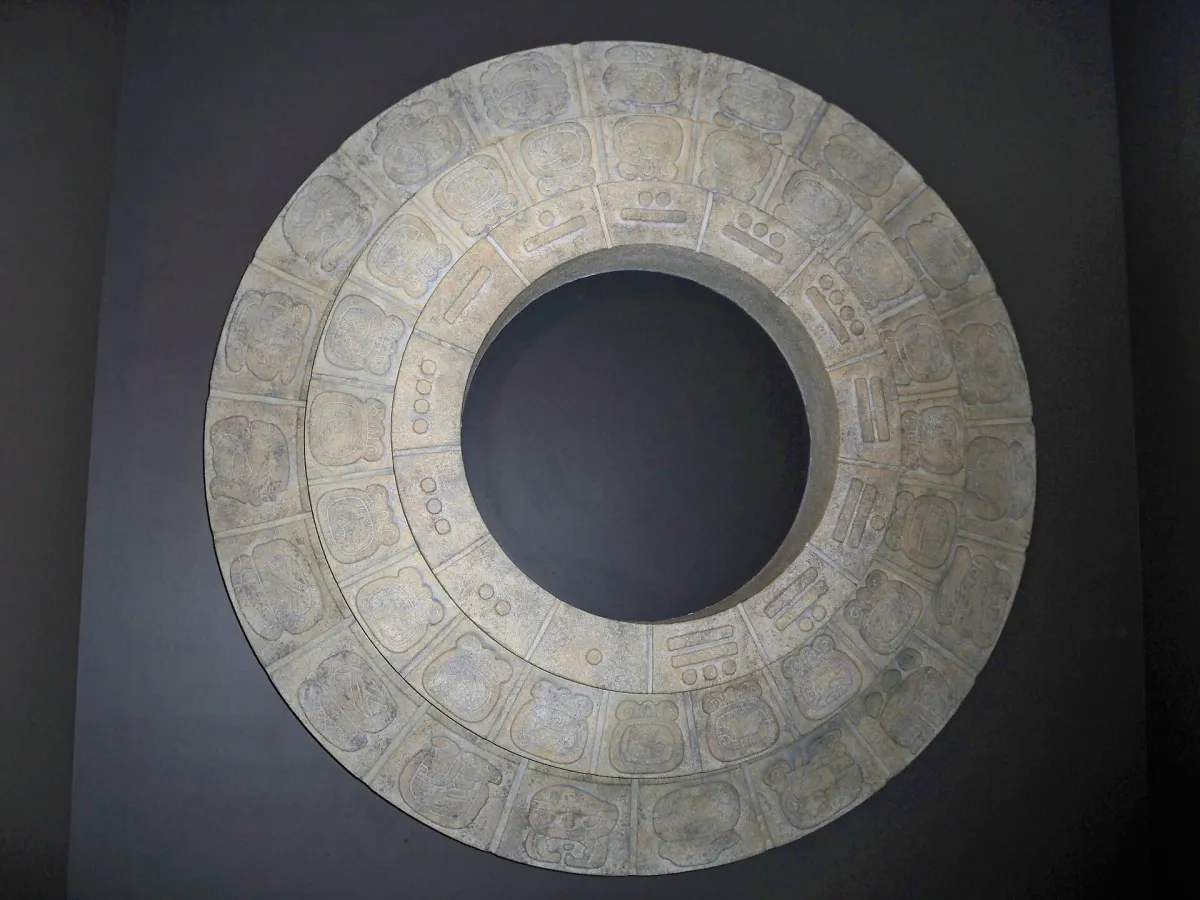
Wikimedia Commons — MBisanz, CC BY-SA 3.0

Historical Setting
The historical anchor for this theory is the widely publicized claim that the Maya calendar marked December 21, 2012 as the end of the world. Smithsonian and NASA materials later emphasized that the date represented the completion of a 13-baktun cycle in the Maya Long Count calendar, not a prediction of annihilation. The ancient Maya record treated the date as the end of a cycle and the beginning of another, not as universal termination.
Once December 21, 2012 passed without global destruction, earlier doomsday believers and later metaphysical interpreters needed a new frame. Rather than abandoning the significance of the date, they shifted the meaning of “end” from material collapse to hidden continuity failure.
Central Claim
The core claim is that our original world ended in December 2012 and that consciousness continued in a substitute environment. Some versions describe this substitute as a holographic loop. Others call it a simulation branch, static overlay, or low-resolution copy of reality. In all versions, post-2012 history feels strange, repetitive, emotionally flattened, or discontinuous because the world is no longer “real” in its original sense.
The word “miscalculation” is important. It suggests not that the Maya were wrong, but that modern interpreters expected the wrong kind of ending. They looked for fire, flood, or impact when the actual event was a silent transfer.
Why the Theory Spread
The theory spread because December 2012 had already become one of the most globally recognized apocalypse dates in modern popular culture. Once a date has absorbed that much symbolic charge, it rarely disappears when nothing happens. Instead, the meaning mutates.
It also spread because the 2010s and early 2020s gave many people a strong feeling of unreality. Political shocks, digital saturation, algorithmic life, Mandela Effects, and rapid cultural fragmentation made “the world feels different now” into a common emotional experience. The Mayan Miscalculation theory gave that feeling a date and a cause.
The Calendar, the Cycle, and the Shift
A major strength of the theory is that it still uses the original calendar framework. The end of the 13-baktun cycle remains central, but is no longer read as planetary destruction. Instead, it becomes a cosmic checkpoint or world-layer transition. The “new cycle” language found in more grounded explanations is radically repurposed. What begins after 2012 is not just another era. It is another order of existence.
Static Loop and Repetition
The “static holographic loop” language gives the theory its modern texture. Reality is said to continue, but with reduced novelty. People report that culture loops, history echoes itself, and social life feels increasingly synthetic. In this interpretation, these experiences are not symptoms of media acceleration or memory bias. They are artifacts of a looped world that can no longer generate true historical depth.
This is where the theory overlaps with later simulation and Mandela Effect narratives. 2012 becomes the boundary after which strange continuity errors are no longer incidental, but structural.
Legacy
The "Mayan Miscalculation" theory remains one of the most adaptive post-apocalypse conspiracies because it converts a failed prophecy into a hidden victory. The world did not visibly end, so believers moved the end inward—into timeline, memory, atmosphere, and reality structure. Its strongest claim is that December 2012 mattered exactly as promised, but modern observers expected the wrong spectacle. The apocalypse was not cancelled. It was rendered invisible by the world that replaced it.