
Overview
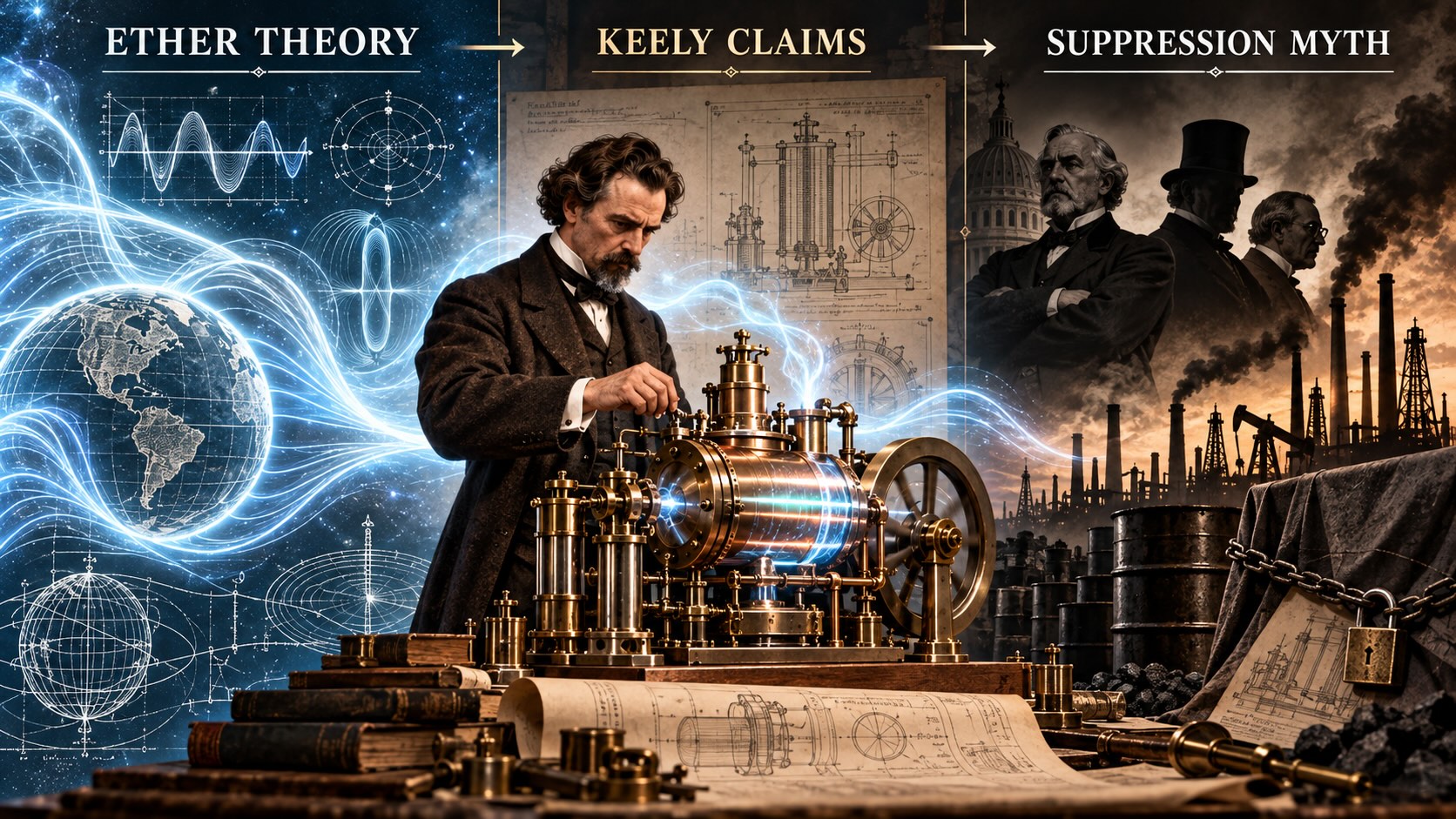
The luminiferous-aether suppression theory is one of the oldest modern free-energy conspiracies. It begins with a respectable scientific concept—the ether—and turns it into a hidden power source. In this view, scientists first recognized that all space was filled with a subtle medium, then inventors learned how to tap it, and finally industry and orthodoxy moved to bury the discovery.
This theory later fed into Tesla-era myths, but its roots are older. In the late nineteenth century, ether was still a normal element of physical theory, not fringe speculation. That gave energy dreamers a powerful advantage: they could anchor radical claims in recognized science.
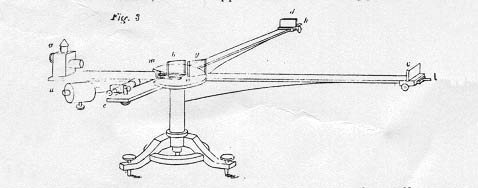
Wikimedia Commons — Albert A. Michelson, Public domain

Historical Background
The luminiferous ether was a standard theoretical medium in nineteenth-century wave theories of light and electromagnetism. It was thought to permeate all space and all matter. To many speculative thinkers, such a medium looked not only like a carrier of light but like a universal sea of force.
At the same time, inventors and promoters were making sensational claims about vibratory engines, radiant force, and new physical powers. John Worrell Keely was the most famous American figure in this area. He claimed to derive power from hidden vibratory principles associated with etheric language, and he attracted investors despite scientific skepticism.
Core Claim
The theory’s central claim was that energy abundance had been glimpsed but buried.
Ether as latent power
One version held that if ether filled the universe, then it must contain usable motion or force waiting to be extracted.
Inventors knew more than they revealed
Another version said certain inventors had in fact learned how to access this energy but were silenced, defamed, bought off, or discredited.
Fuel empires needed suppression
The strongest version argued that coal, steam, later petroleum capital, and orthodox physics all had a shared interest in preventing the rise of a nearly free universal energy source.
Why the Theory Spread
The theory spread because ether was already invisible, omnipresent, and physically mysterious. It did not feel absurd to imagine that a subtle medium might hide unsuspected force. The age was also intoxicated with electrical novelty. Telegraphy, dynamos, batteries, and motors had all recently transformed the world. A further breakthrough no longer seemed unimaginable.
Keely-style inventors helped as well. Even when mainstream scientists doubted them, their demonstrations and promises gave the public a vocabulary of hidden vibratory power. Suppression theories thrive wherever recognized science and spectacular invention appear to overlap.
The Keely Problem
Keely is central to the theory because he offered the public a narrative of secret force without mainstream proof. He claimed astonishing energy effects and tied them to unseen vibratory principles that many observers associated with ether. Critics accused him of fraud; believers treated him as a suppressed discoverer.
This ambiguity made him ideal for later conspiracy memory. If he was a fraud, then the idea died. If he had even a fragment of something real, then perhaps modern energy history had been diverted.
Ether Physics and Later Collapse
One reason the suppression theory survived is that the ether concept itself did not simply vanish from respectability overnight. It was a serious scientific framework throughout much of the nineteenth century. Only after experimental and theoretical developments late in the century and early twentieth century weakened its role did ether become easier to treat as “forbidden” knowledge.
The conspiracy reading interprets that intellectual displacement not as science correcting itself, but as establishment retreat from dangerous truth.
What Is Documented
The luminiferous ether was a real and mainstream nineteenth-century scientific concept. John Worrell Keely publicly claimed to obtain power from ether-related vibratory forces and organized a company around those claims. Scientific authorities were skeptical and considered his demonstrations unverified. Later physics, especially after ether-detection efforts failed, moved away from the old framework.
What Is Not Proven
There is no reliable evidence that a practical free-energy technology based on ether was successfully developed and then buried by coal or oil tycoons. The suppression theory remains an extrapolation from real physics concepts and speculative inventors, not a demonstrated industrial cover-up.
Significance
The luminiferous-aether suppression theory remains important because it shows how quickly orthodox science can be recycled into forbidden knowledge once a theory falls out of favor. It is the nineteenth-century ancestor of many later hidden-energy myths.